

The clothes you wear daily come into direct contact with your skin for hours at a time, making fabric choice more critical than most men realize. Traditional clothing manufacturing often involves synthetic materials, chemical dyes, and finishing treatments that can irritate skin, disrupt hormones, and contribute to environmental pollution. Understanding non toxic clothing helps you make informed decisions that benefit both personal health and the planet.
Understanding What Makes Clothing Toxic
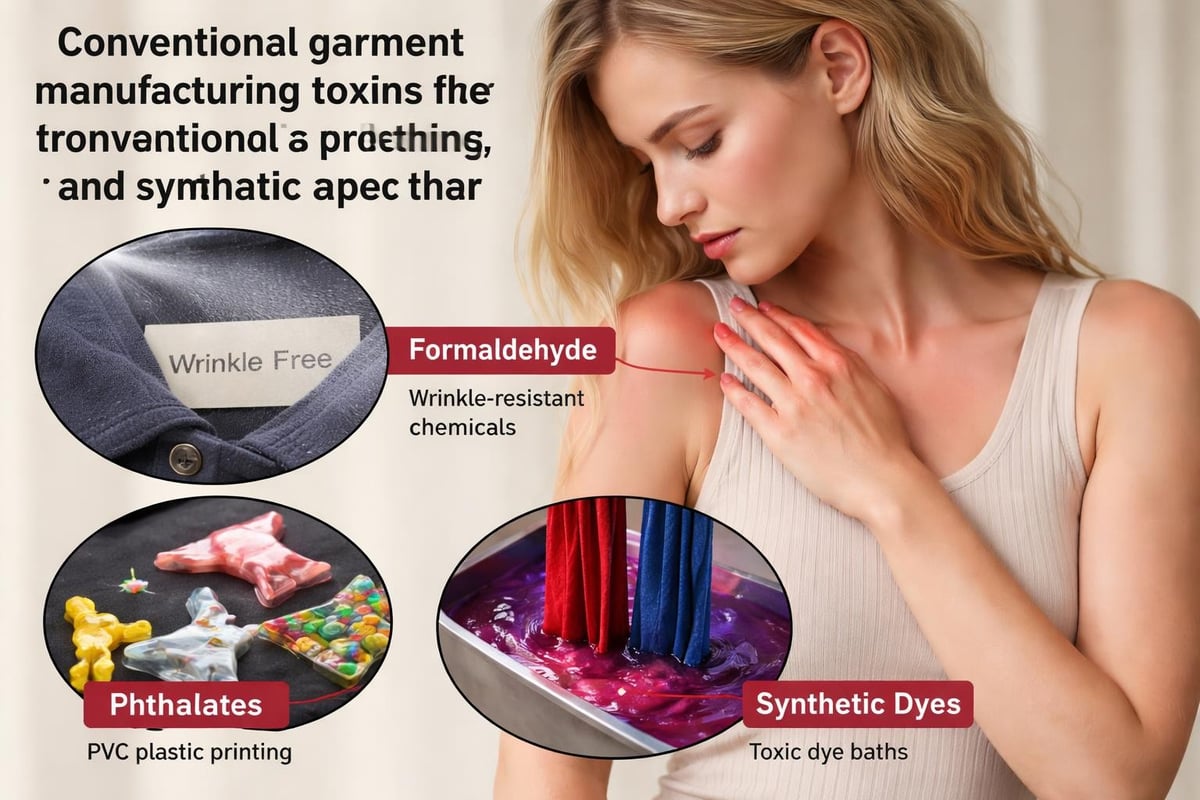
Most conventional garments undergo extensive chemical processing before reaching store shelves. Synthetic fabrics like polyester and nylon are derived from petroleum products, while finishing treatments add formaldehyde, phthalates, and heavy metals to achieve wrinkle resistance, water repellency, or vibrant colors.
These chemicals don't always stay locked in the fabric. Research shows that harmful substances can leach into your skin, especially when you perspire during workouts or warm weather. For men wearing boxer briefs and undershirts against sensitive skin all day, this constant exposure becomes particularly concerning.
Common Toxic Chemicals in Conventional Clothing
The fashion industry uses thousands of chemical compounds throughout production. Here are the most problematic:
- Azo dyes that can release carcinogenic compounds
- Formaldehyde resins added for wrinkle-free finishes
- Phthalates used to make prints and graphics flexible
- Per- and polyfluoroalkyl substances (PFAS) for water resistance
- Heavy metals like lead and cadmium in dyes and prints
The Benefits of Choosing Non Toxic Clothing
Switching to non toxic clothing delivers measurable improvements in comfort, health, and environmental impact. Men with sensitive skin often notice immediate relief from irritation, rashes, and allergic reactions when they eliminate chemically treated fabrics from their wardrobe.
Natural, responsibly produced materials like organic cotton and TENCEL™ Lyocell offer superior breathability and moisture management. These fabrics allow your skin to regulate temperature naturally without synthetic interference or chemical residues.
Health and Comfort Advantages
| Benefit Category | Conventional Clothing | Non Toxic Clothing |
|---|---|---|
| Skin Irritation | Common with synthetic dyes | Minimal with certified organic |
| Breathability | Limited in polyester blends | Excellent in natural fibers |
| Chemical Exposure | High during wear | Eliminated or minimal |
| Moisture Management | Often requires chemical treatments | Natural fiber properties |
Beyond personal health, choosing non toxic clothing supports environmental sustainability. Chemical-intensive manufacturing pollutes waterways, depletes soil quality, and contributes to textile industry carbon emissions. When you invest in sustainable menswear, you're voting for cleaner production methods with your purchasing power.
Key Certifications to Look For
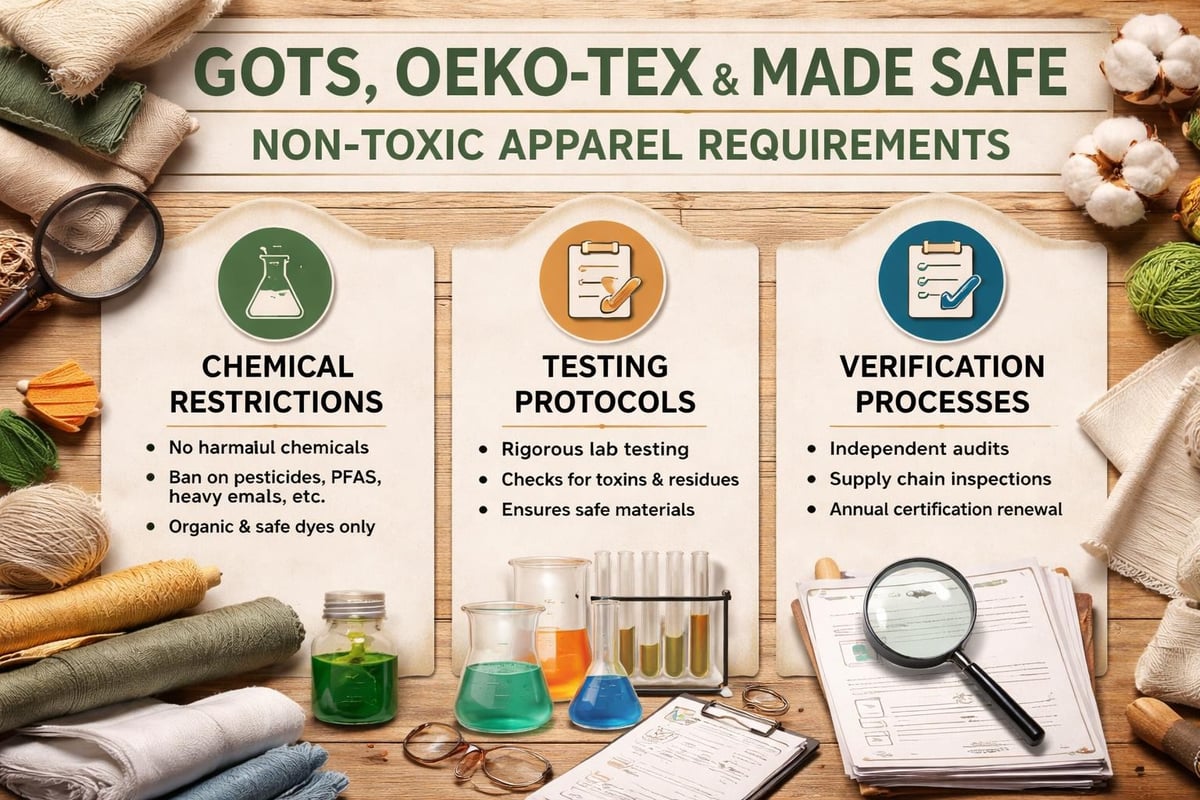
Navigating non toxic clothing becomes easier when you understand industry certifications. Third-party verification ensures brands meet rigorous standards for chemical safety, environmental practices, and social responsibility.
Fashion FWD provides comprehensive guidance on the most trusted certifications for safe apparel. These labels serve as your shortcut to identifying genuinely non toxic options among greenwashing claims.
Most Reliable Certification Standards
- GOTS (Global Organic Textile Standard) – Covers organic fiber production and prohibits toxic chemicals throughout manufacturing
- OEKO-TEX Standard 100 – Tests finished products for harmful substances against strict limits
- Cradle to Cradle Certified – Evaluates material health, recyclability, and social fairness
- MADE SAFE – Screens for thousands of toxic chemicals across ingredients and materials
- Bluesign – Focuses on safe chemical inputs and resource efficiency in textile production
When shopping for essentials like boxer briefs, look for these certifications on product labels or brand websites. They represent independent verification rather than self-proclaimed marketing terms.
Identifying Safe Fabrics and Materials
Not all natural fibers qualify as non toxic clothing. Conventional cotton, despite being plant-based, involves heavy pesticide use and chemical processing. The key lies in both fiber choice and production methods.
Best Natural Fiber Options:
- Organic cotton (GOTS certified)
- TENCEL™ Lyocell from sustainably managed forests
- Organic linen from flax plants
- Peace silk (cruelty-free sericulture)
- Organic hemp with minimal processing
Fibers Requiring Extra Scrutiny:
- Conventional cotton (high pesticide use)
- Bamboo rayon/viscose (chemically processed despite natural origin)
- Conventional wool (may involve toxic dip treatments)
Understanding fabric options helps you distinguish between genuinely safe materials and those with misleading natural-sounding names. TENCEL™ Lyocell, for instance, combines natural wood pulp with a closed-loop manufacturing process that recycles water and solvents, making it both sustainable and non-toxic.
Practical Steps for Building a Non Toxic Wardrobe
Transitioning to non toxic clothing doesn't require replacing your entire wardrobe overnight. Strategic upgrades deliver the most impact when you prioritize items with maximum skin contact and wear time.
Start With High-Impact Essentials
Focus first on garments that touch your skin directly for extended periods:
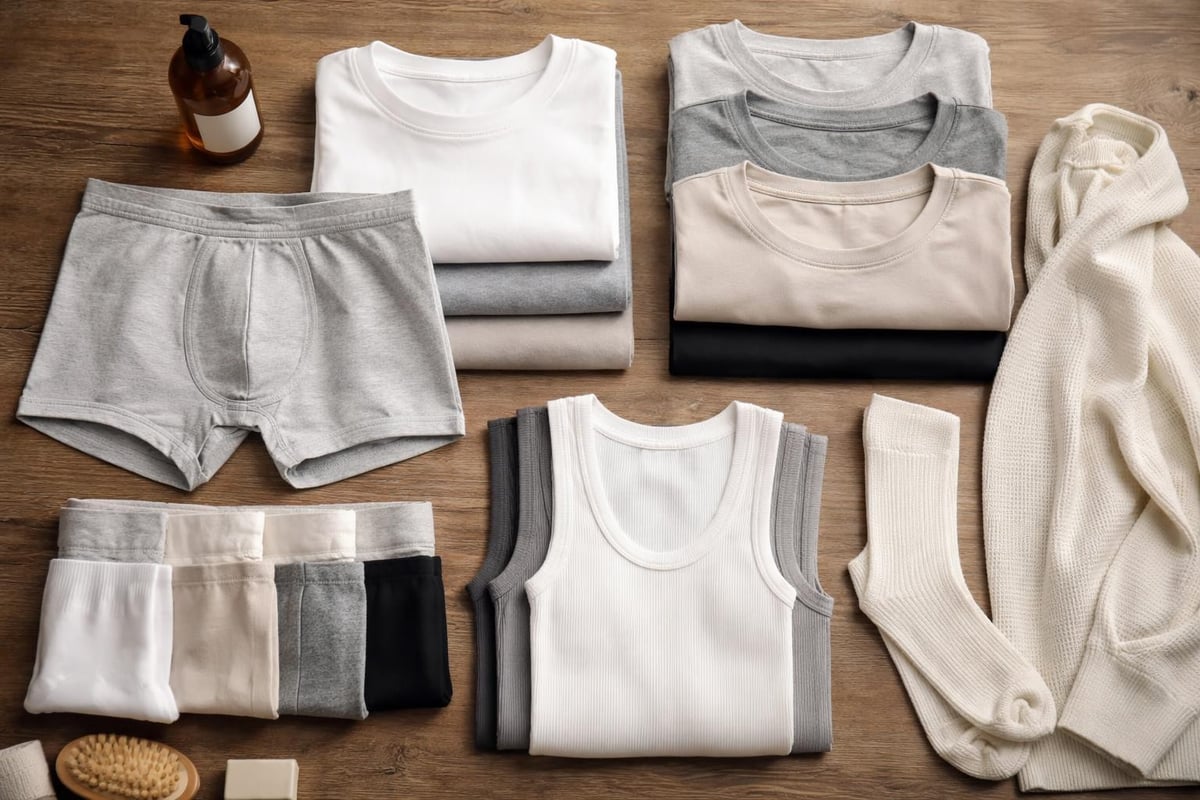
- Underwear and boxer briefs – Eight to twelve hours of daily skin contact
- Undershirts and base layers – Worn beneath other clothing year-round
- Socks – Enclosed environment with moisture and friction
- Sleep clothing – Extended nighttime exposure during body recovery
These foundational pieces make excellent starting points for premium, non toxic alternatives that improve daily comfort while reducing chemical exposure.
Care and Maintenance Considerations
Even certified non toxic clothing benefits from proper care to maintain its chemical-free status. Experts recommend specific washing practices to preserve fabric integrity and avoid introducing new contaminants.
Essential Care Tips:
- Wash new garments before first wear to remove manufacturing residues
- Use fragrance-free, plant-based detergents without optical brighteners
- Avoid conventional fabric softeners containing quaternary ammonium compounds
- Line dry when possible to reduce energy use and extend garment life
- Store clothes in breathable containers, not plastic bags with chemical odors
Quality non toxic clothing like moisture-wicking TENCEL™ boxer briefs actually becomes softer and more comfortable with proper washing, unlike synthetic alternatives that degrade and release microplastics.
Making Informed Purchase Decisions
Price often creates hesitation when considering non toxic clothing, but the investment calculation extends beyond initial cost. Certified organic and responsibly produced garments typically offer superior durability, requiring fewer replacements over time.
Calculate true value by considering:
- Longevity – Well-made natural fibers last years longer than fast fashion synthetics
- Health savings – Reduced skin irritation eliminates need for treatment products
- Versatility – Timeless, quality basics work across multiple settings and seasons
- Environmental cost – Avoiding pollution and waste has long-term planetary value
Understanding what defines premium quality helps justify the investment in pieces that perform better and last longer while protecting your health.
Choosing non toxic clothing represents an investment in personal health, daily comfort, and environmental responsibility. By prioritizing certified organic materials, understanding key certifications, and starting with high-contact essentials, you can systematically reduce chemical exposure while improving how your clothes actually feel. Konquer Wear offers TENCEL™ Lyocell and organic cotton boxer briefs designed for men who refuse to compromise between comfort, style, and conscious values. Discover how premium, responsibly made essentials can elevate your daily routine.

